
What are some generator considerations for powering Emergency Disaster Relief: Serves as critical backup power for hospitals, data centers, and municipalities during unexpected outages or severe weather.
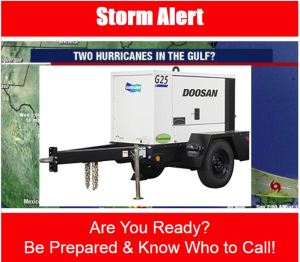
Deploying construction and infrastructure generators for emergency and disaster relief requires meticulous planning to ensure zero downtime for critical facilities. Key considerations include rapid deployment, multi-day fuel storage, redundant infrastructure, seamless grid-to-generator transfers, and strict regulatory compliance.
Essential considerations for critical infrastructure backup power include:
- Regulatory Compliance & Response Times:
- Hospitals must meet NFPA 110 standards, which mandate that emergency generators supply critical life-safety loads within 10 seconds of a grid failure.
- Facilities must adhere to federal and local EPA emissions standards, which are often eased for strict emergency use but heavily regulated during non-emergency peak shaving or testing.
- Fuel Autonomy & Supply Resilience:
- Infrastructure sites (like hospitals) must store enough on-site fuel to support continuous operation for a minimum of 96 hours.
- Logistical plans must be established to refill massive fuel tanks (which can consume hundreds of gallons per hour) during severe weather or infrastructure damage.
- Redundancy & Load Management:
- Critical facilities utilize redundant setups like N+1 or 2N architecture, meaning they have more generators than the total required operating capacity.
- Generators should be paralleled to allow load-sharing and modular scalability for future growth.
- Site Hardening & Environmental Placement:
- Backup generators and fuel tanks should be located outside of 100-year or 200-year floodplains, often installed on raised concrete platforms to avoid water damage.
- Systems must be protected from high winds and windborne debris, with adequate ventilation and exhaust routing to ensure safe operation.
- Seamless Power Transfers:
- Facilities use Automatic Transfer Switches (ATS) or Uninterruptible Power Supplies (UPS) to route from utility power to emergency generation seamlessly without damaging sensitive data or medical equipment.
Question 1: Are you utilizing an Uninterruptible Power Supply (UPS)?
Answer 1: For data centers and surgical units, can your generator integrate with dynamic UPS systems that provide bridge power during the 10 to 15 seconds the generator takes to start and transfer the load?
Question 2: What is the fuel source and is it secure during a disaster?
Answer 2: Diesel is reliable but heavily relies on post-disaster delivery logistics; natural gas offers pipeline continuity but may suffer from pressure drops during regional emergencies.
Question 3: Do you have an Automatic Transfer Switch (ATS) installed?
Answer 3: Can the system seamlessly detect grid failure and automatically route power to the critical circuits without human intervention?